Internal Link Architecture: PageRank Flow, Crawl Depth, and INLINKS DB
Written by SEOdiag Team · Published on 2026-08-11
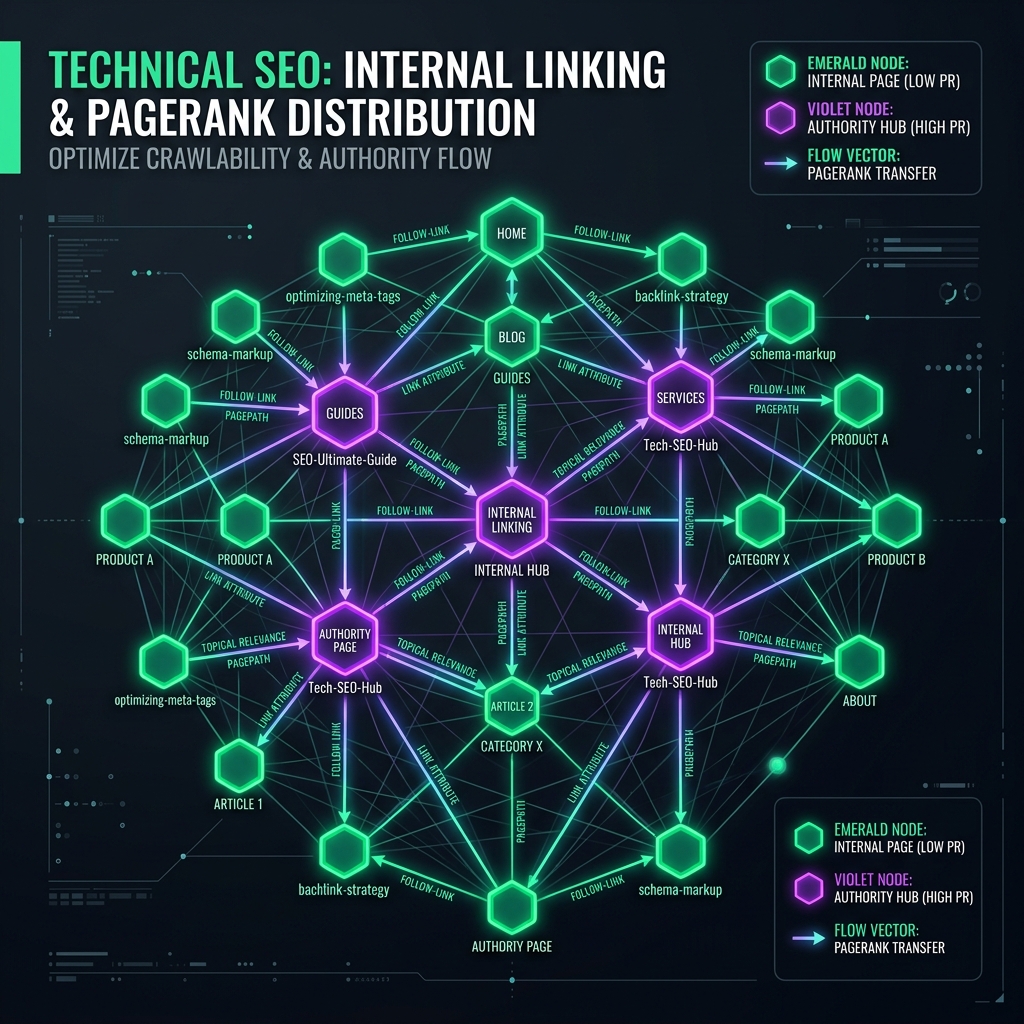
Internal link architecture is one of the most underrated leverage points in technical SEO. While external backlinks build domain authority, internal links determine how that authority (link equity) is distributed and how frequently search bots crawl each section of your website.
Without a structured internal linking hierarchy, critical pages get buried deep within your site architecture, consuming crawl budget and losing organic search visibility.
How Internal PageRank Distribution Works
The PageRank algorithm measures a page's relative importance based on the quantity and quality of incoming links. When your homepage receives external link equity, that authority flows downward through your internal hyperlink structure.
| Linking Metric | Flawed Architecture | Optimized Architecture (SEOdiag) |
|---|---|---|
| Average Crawl Depth | > 5 clicks away from Homepage | ≤ 3 clicks for 95% of indexable pages |
| Anchor Text Distribution | Generic anchors ("click here", "read more") | Descriptive keyword-rich semantic anchors |
| Orphan Pages | URLs with 0 internal inbound links | 0 orphan URLs in site architecture |
| Inlink Auditing | Manual spreadsheet checks | Automated exportable INLINKS DB matrix |
1. Reducing Crawl Depth (Crawl Depth ≤ 3)
Crawl depth measures the number of hyperlinks a user or search bot must follow from the homepage to reach a target URL.
[Homepage (Depth 0)]
       │
       ├───> [Main Category (Depth 1)]
       │            │
       │            └───> [Subcategory / Product (Depth 2)]
       │                        │
       │                        └───> [Article / Technical Spec (Depth 3)]
Pages situated at a depth of 4 clicks or greater experience: - Significantly lower re-crawl frequency by Googlebot. - Dramatic decay in passed PageRank authority. - Reduced probability of triggering generative AI Search overviews (GEO).
2. Diagnosing Orphan Pages with INLINKS DB
An orphan page is a URL that exists on the server or in the sitemap.xml, but receives zero internal links from any other page on the website.
To detect and fix orphan pages at scale, SEOdiag generates an exportable INLINKS DB database that maps the entire link graph of your domain:
3. Semantic Anchor Text Optimization
Anchor text provides search engines with vital semantic context regarding the target destination. Avoid non-descriptive phrases such as "click here" or "learn more". Instead, use descriptive phrasing that incorporates target search intent.
Essential recommendations for internal link building: - Review our SEOdiag Help Center to learn how to export internal link reports. - Compare technical crawler capabilities in our SEOdiag Solutions Guide. - Explore cloud crawling options in our guide on the best technical SEO audit tools.
Frequently Asked Questions (FAQ)
Why is internal link architecture critical for technical SEO?
Internal links distribute PageRank (link equity) across your site and establish the topical hierarchy search bots and AI crawlers use to discover and index content.
What is Crawl Depth and what is the recommended limit?
Crawl depth measures the number of clicks required to reach a page from the homepage. To maximize crawl frequency, essential pages should be no more than 3 clicks away.
How does the SEOdiag INLINKS DB table help resolve linking issues?
The INLINKS DB database in SEOdiag records and audits all internal hyperlink relationships, pinpointing orphan URLs, generic anchor text, and PageRank flow bottlenecks.
Conclusion
A well-structured internal link architecture maximizes crawl budget efficiency and ensures your highest-converting pages receive the authority required to rank. Regularly auditing crawl depth and inlink metrics guarantees a clean website structure free of orphan pages.